
Tag: Robotics
-

SwavAI & Leedana: Gaining Access to Resources and Funding at the McGill Dobson Center for Entrepreneurship
Curious about SwavAI and Leedana? This post covers everything! From SwavAI’s innovative communication tool to Leedana’s upcoming software launch, discover how both ventures are shaping the future of self-improvement and sustainable farming. Exciting updates include our acceptance into McGill’s Dobson Center and new developments on both fronts!
-
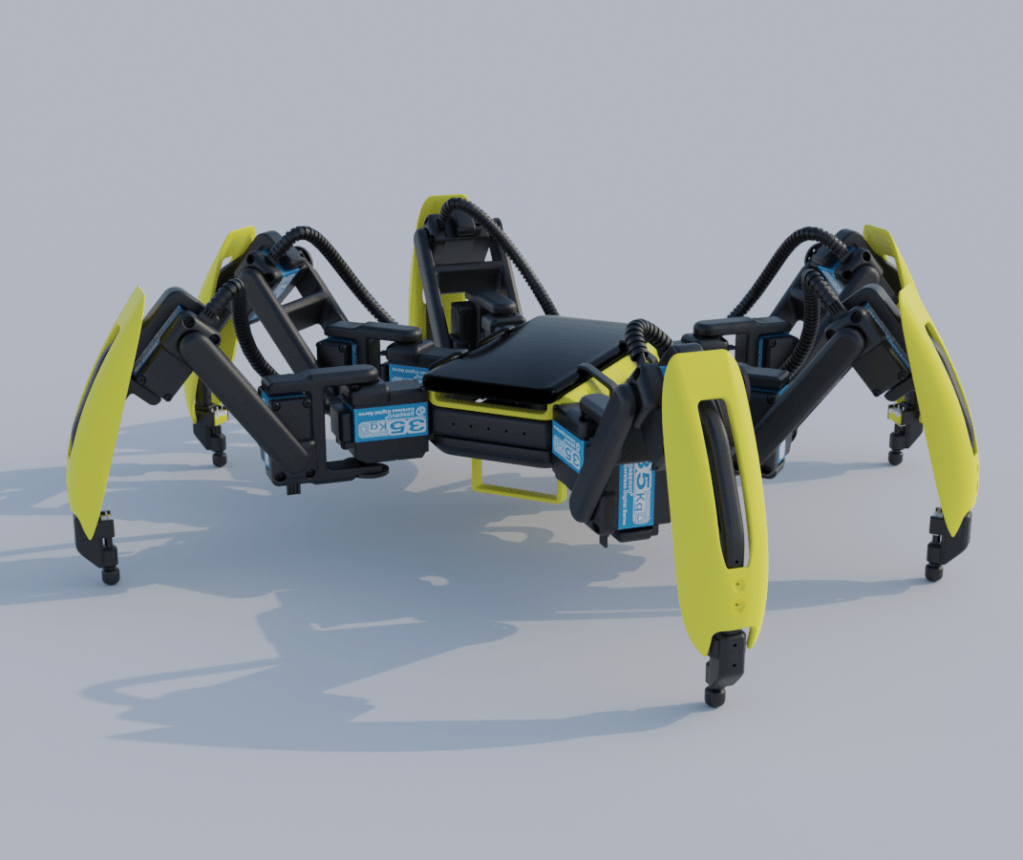
Intelligent Hexapod
This NSERC-funded project pushed the boundaries of intelligent hexapod robotics, making use of 3D printing and ROS2.
-
Part 3: Building the Hexapod Simulation Environment
In this third instalment of the intelligent hexapod series, I explored the integration of the physical robot into a simulation environment using ROS2 (Robot Operating System 2). I provided clear instructions on the setup process, focusing on ROS2 concepts such as nodes, topics, and messages that facilitate efficient communication between components. Additionally, I discussed the…
-
Part 2: Assembly and Electronics – Bringing the Hexapod to Life
In this second part of my blog series on building an intelligent hexapod robot, I delve into the assembly process and the electronics embedded within the system. Discover how I integrated servo motors, the Raspberry Pi Pico RP2040 board, and various sensors to bring the hexapod to life. Despite encountering a few challenges along the…
-
Part 1: Hexapod – Exploring the Intersection of Hardware and Intelligence
Embark on a captivating journey with me as we delve into the world of Hexapods, exploring the fascinating fusion of hardware and intelligence. Join my research endeavor as we unravel the crucial role of embedded systems and intelligent hardware in realizing true artificial general intelligence. From 3D modeling to post-processing and painting, witness the meticulous…
-

Towards AGI in Robotics: An Exploratory Approach to Self-Maintenance
Building upon the quest for General Artificial Intelligence (AI) in robotics, this article proposes a novel architecture for a self-maintaining robot. Employing a triad of Perception, Cognition, and Action modules, the approach leverages machine learning techniques, reinforcement learning, and control theory, allowing the robot to monitor and manage its energy consumption, troubleshoot faults, and perform…
 Gabriel Giangi