
App Builders Aren’t Dumb Pipes. They’re the Most Profitable Actors in the Knowledge Economy.
February 23, 2026 In my last post, I mapped out 24 actor types across the Nodalync network and shared simulation results showing that Domain Experts earn 5.3× more than Aggregators in 98% of runs. The economics work. The 95/5 split rewards foundational knowledge over extraction. But something was off. Application Builders — the actors who…
Every Role in the Knowledge Economy That’s Coming
You already have a seat at this table. Here’s where you sit. There’s a future arriving faster than most people realize. A future where every piece of knowledge you’ve ever created — every research paper, every technical document, every hard-won insight from years of experience — generates value every single time someone builds on it.…
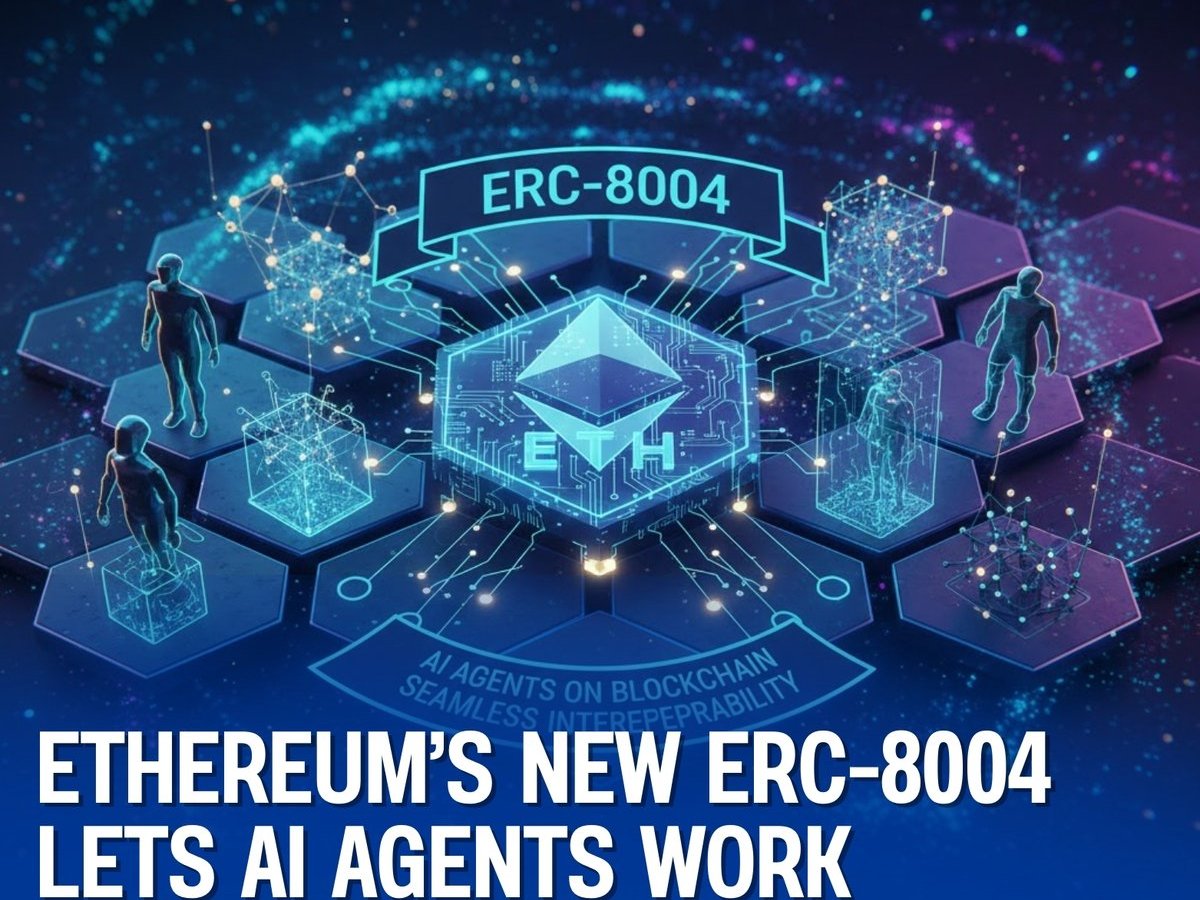
ERC-8004 Just Launched. Here’s Why That’s Good News for Nodalync.
January 28, 2026 Yesterday, Ethereum rolled out ERC-8004 (https://eips.ethereum.org/EIPS/eip-8004) to mainnet—a new standard that gives AI agents persistent on-chain identities and portable reputations. My first reaction, like many building in the AI infrastructure space, was to ask: does this compete with what we’re building at Nodalync ? After digging into the spec, my answer is…

AI Won’t Replace You. Someone Using AI Will.
After a year consulting enterprises on AI strategy, I’ve noticed something that keeps me up at night. The companies investing millions in AI pilots, governance frameworks, and “centers of excellence” are moving slower than individuals teaching themselves to build in a weekend. This isn’t a criticism—it’s an observation with consequences. The Enterprise Paradox Large organizations…

SwavAI & Leedana: Gaining Access to Resources and Funding at the McGill Dobson Center for Entrepreneurship
Curious about SwavAI and Leedana? This post covers everything! From SwavAI’s innovative communication tool to Leedana’s upcoming software launch, discover how both ventures are shaping the future of self-improvement and sustainable farming. Exciting updates include our acceptance into McGill’s Dobson Center and new developments on both fronts!
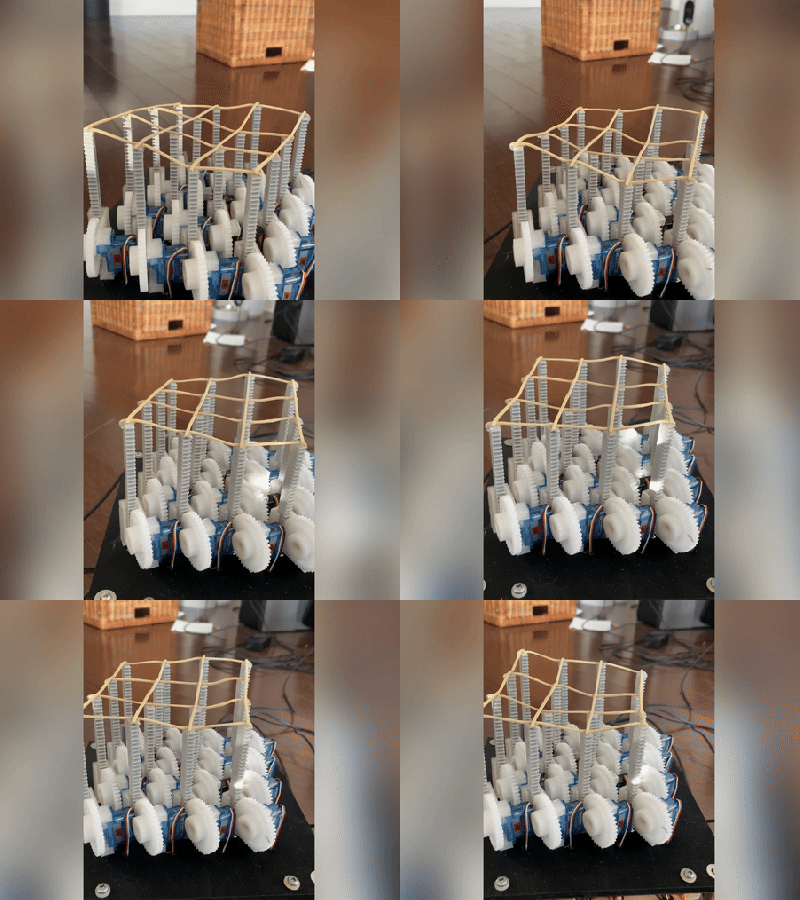
Refining Our Vision: The Next Steps for SwavAI
Over the past six months, we’ve refined SwavAI’s flagship product and are excited to share a sneak peek of our prototype. With the lighting system in development, we’re moving towards a cohesive model. Join our waitlist at swavai.com for early access, exclusive discounts, and personalized technology.

Shaping Spaces with SwavAI: My Journey from Code to Canvas
Dive into the story of SwavAI, where art installations come alive to redefine personal spaces. Join me, as I share the latest updates on my startup’s journey, the insights gleaned from entrepreneurial endeavors, and a sneak peek into the future of interactive art that grows with you. Discover how a blend of technology, art, and…
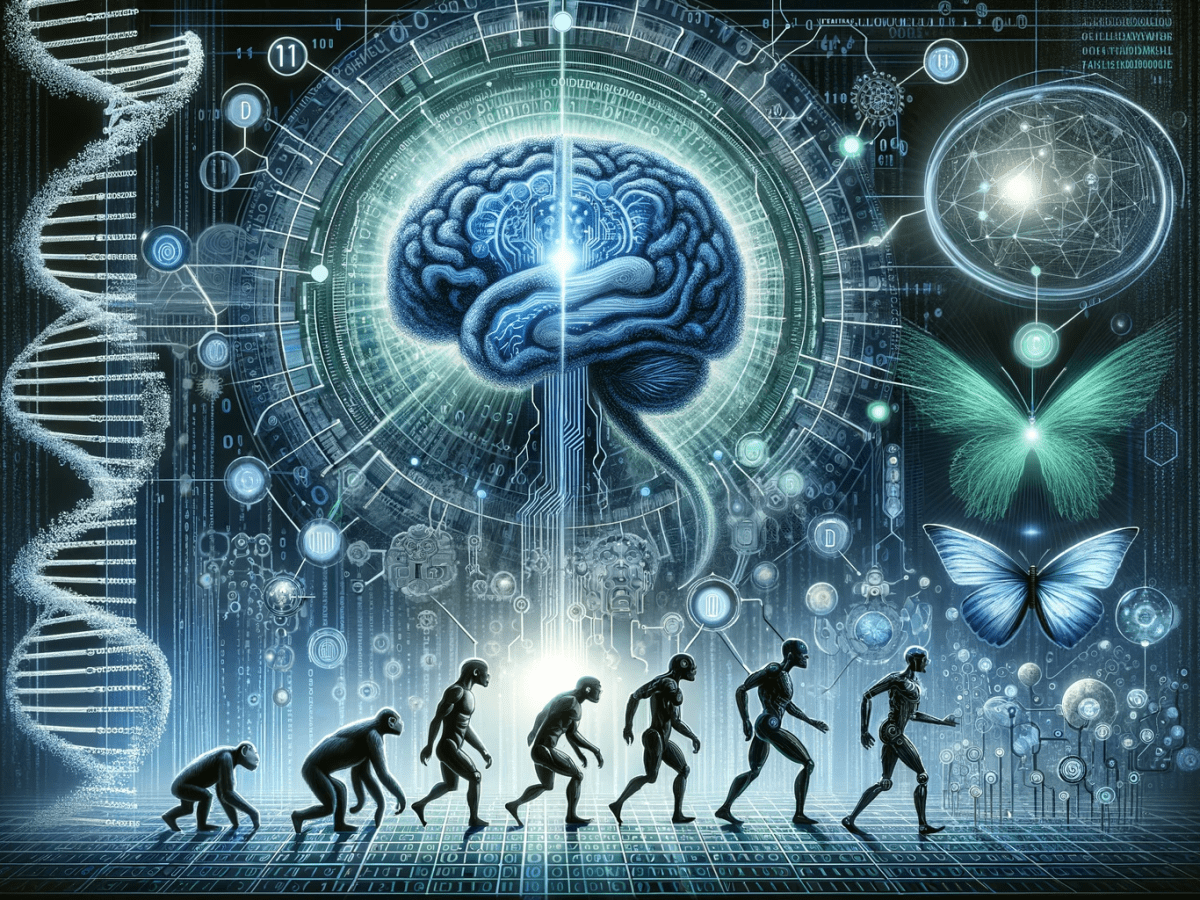
Beyond Human Bounds: The Evolutionary Journey to Artificial General Intelligence
In this article, I dissect and scrutinize the prevalent employment of Large Language Models (LLMs) and anthropomorphic approaches. This article takes a critical view of these methodologies, shedding light on their limitations and potential pitfalls in our ambitious journey towards achieving AGI. Join me in reevaluating the strategies that guide our pursuit of intelligence that…

Part 3: Building the Hexapod Simulation Environment
In this third instalment of the intelligent hexapod series, I explored the integration of the physical robot into a simulation environment using ROS2 (Robot Operating System 2). I provided clear instructions on the setup process, focusing on ROS2 concepts such as nodes, topics, and messages that facilitate efficient communication between components. Additionally, I discussed the…

Part 2: Assembly and Electronics – Bringing the Hexapod to Life
In this second part of my blog series on building an intelligent hexapod robot, I delve into the assembly process and the electronics embedded within the system. Discover how I integrated servo motors, the Raspberry Pi Pico RP2040 board, and various sensors to bring the hexapod to life. Despite encountering a few challenges along the…

Part 1: Hexapod – Exploring the Intersection of Hardware and Intelligence
Embark on a captivating journey with me as we delve into the world of Hexapods, exploring the fascinating fusion of hardware and intelligence. Join my research endeavor as we unravel the crucial role of embedded systems and intelligent hardware in realizing true artificial general intelligence. From 3D modeling to post-processing and painting, witness the meticulous…

Towards AGI in Robotics: An Exploratory Approach to Self-Maintenance
Building upon the quest for General Artificial Intelligence (AI) in robotics, this article proposes a novel architecture for a self-maintaining robot. Employing a triad of Perception, Cognition, and Action modules, the approach leverages machine learning techniques, reinforcement learning, and control theory, allowing the robot to monitor and manage its energy consumption, troubleshoot faults, and perform…

Federated Graph Neural Networks: An In-Depth Look
In the evolving field of Federated Learning, an under-explored aspect lies in the relationships between participants, often forming a complex graph topology. This post delves into the concept of these relationship graphs, using medical research collaboration and import/export logistic tracking as real-world examples.

Harnessing the Power of Affective Computing: Use Cases and Research Areas
In the intriguing field of affective computing, Speech Emotion Recognition (SER) stands out as a rapidly evolving discipline. With the advent of deep learning and large pre-trained self-supervised models like Wav2Vec 2.0 and WavLM, SER is undergoing a significant transformation. The introduction of the SEIR-DB, one of the most diverse SER datasets, and the development…
3D Printing Affective Computing agentic agentic-ai Agentic-Economy agentic-infrastructure ai AI Strategy & Governance Artificial General Intelligence Artificial Intelligence Computer Vision economy Entrepreneurship ethereum Federated Learning Graph Neural Networks HardTech hedera Human Computer Interaction infrastructural-mutualism knowledge-economics Knowledge Graphs Large Language Models Logistics Natural Language Processing nodalync Random Forests Reinforcement Learning Robotics ROS Self Development Self Supervised Learning Semantic Web simulation Speech Emotion Recognition SwavAI technology Transfer Learning Transportation
 Gabriel Giangi